Whole-of-organisation cohorts that need a common AI baseline
AI literacy training
AI Literacy Training for Teams, Leaders, and Organisations
AI literacy training gives everyone in an organisation the shared language, concepts, and judgement to engage with AI safely and sensibly — the foundation layer that makes every later AI investment work better.
AI literacy is the baseline understanding of what AI is, what it can and cannot do, how to use it responsibly, and how to judge its output. It differs from AI fluency, which is the applied, hands-on skill of working with AI tools in real workflows. Most organisations need both: literacy across the whole workforce, fluency for the teams whose work AI reshapes first. My AI literacy programs are plain-English, sector-aware, and built for non-technical audiences.








Who this is for
AI Literacy Training for Teams, Leaders, and Organisations that match the audience and the buying intent.
Boards, executives, and managers who approve or govern AI use
Public-sector, university, and professional-services teams with responsible-use obligations
HR, L&D, and capability leads sequencing a broader AI program
What improves
The outcome is stronger judgement plus a more useful next step.
A shared, accurate vocabulary for AI across the organisation
Clear understanding of capabilities, limits, risks, and responsible use
Staff who can judge AI output instead of accepting or rejecting it blindly
A foundation that makes AI fluency, upskilling, and adoption programs land faster
Delivery formats
A session shape that suits the room, not just the keyword.
AI literacy foundations session
A plain-English session covering what AI and generative AI are, where they help, where they fail, and how to use them responsibly in your context.
Whole-of-organisation literacy program
A structured rollout across departments, tuned by role and risk profile, so the entire workforce reaches a dependable baseline.
Leadership and governance briefing
A focused session for boards and executives on capability, risk, governance, and the decisions AI literacy should inform.
What gets covered
Topics shaped for practical Australian adoption.
What AI and generative AI actually are, in plain English
What AI can and cannot do — capability and limitation literacy
Responsible and safe use, privacy, and data judgement
How to evaluate AI output and avoid over-trust
AI literacy vs AI fluency, and how to sequence both
Sector-specific risks for government, education, and professional services
Proof
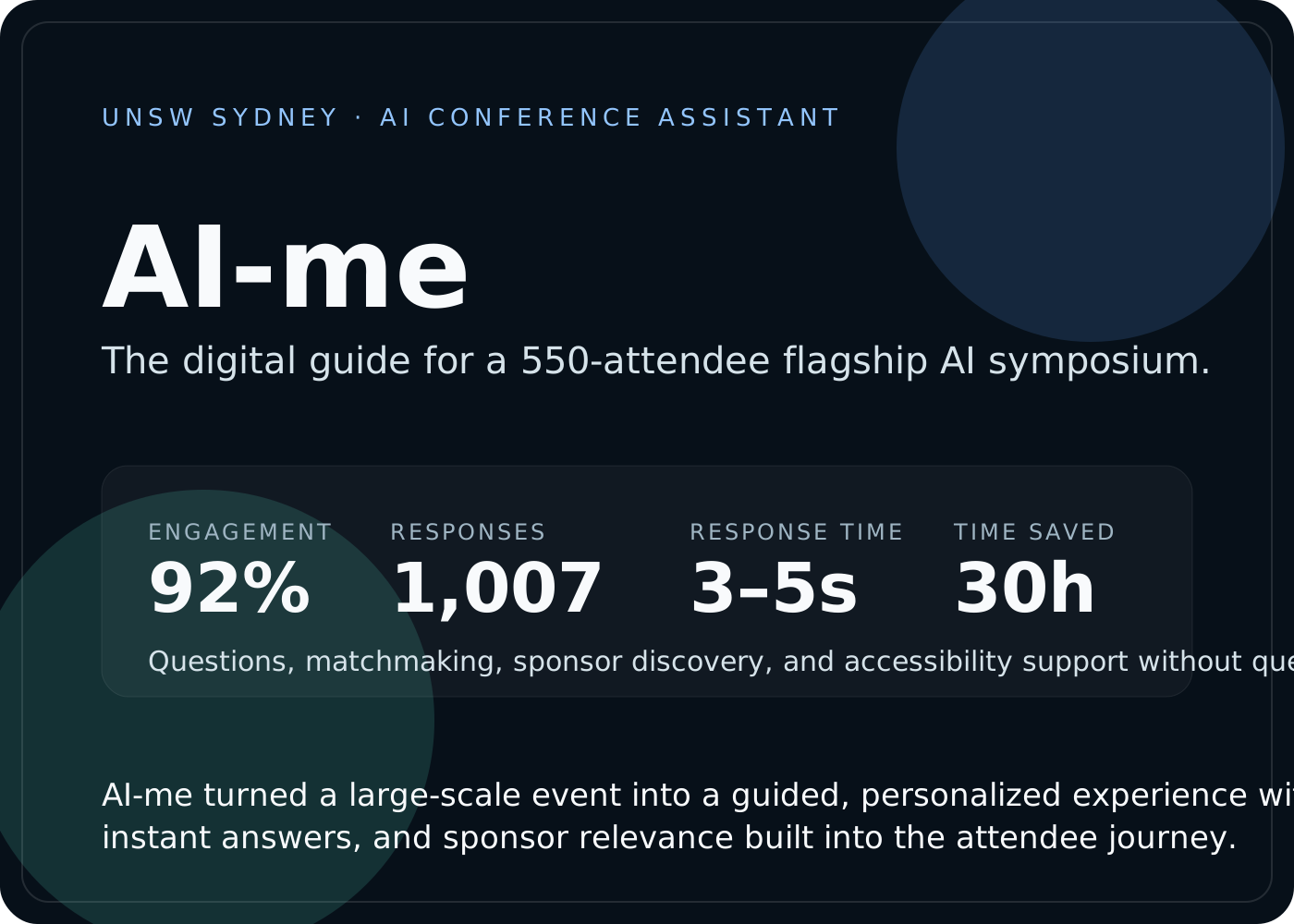
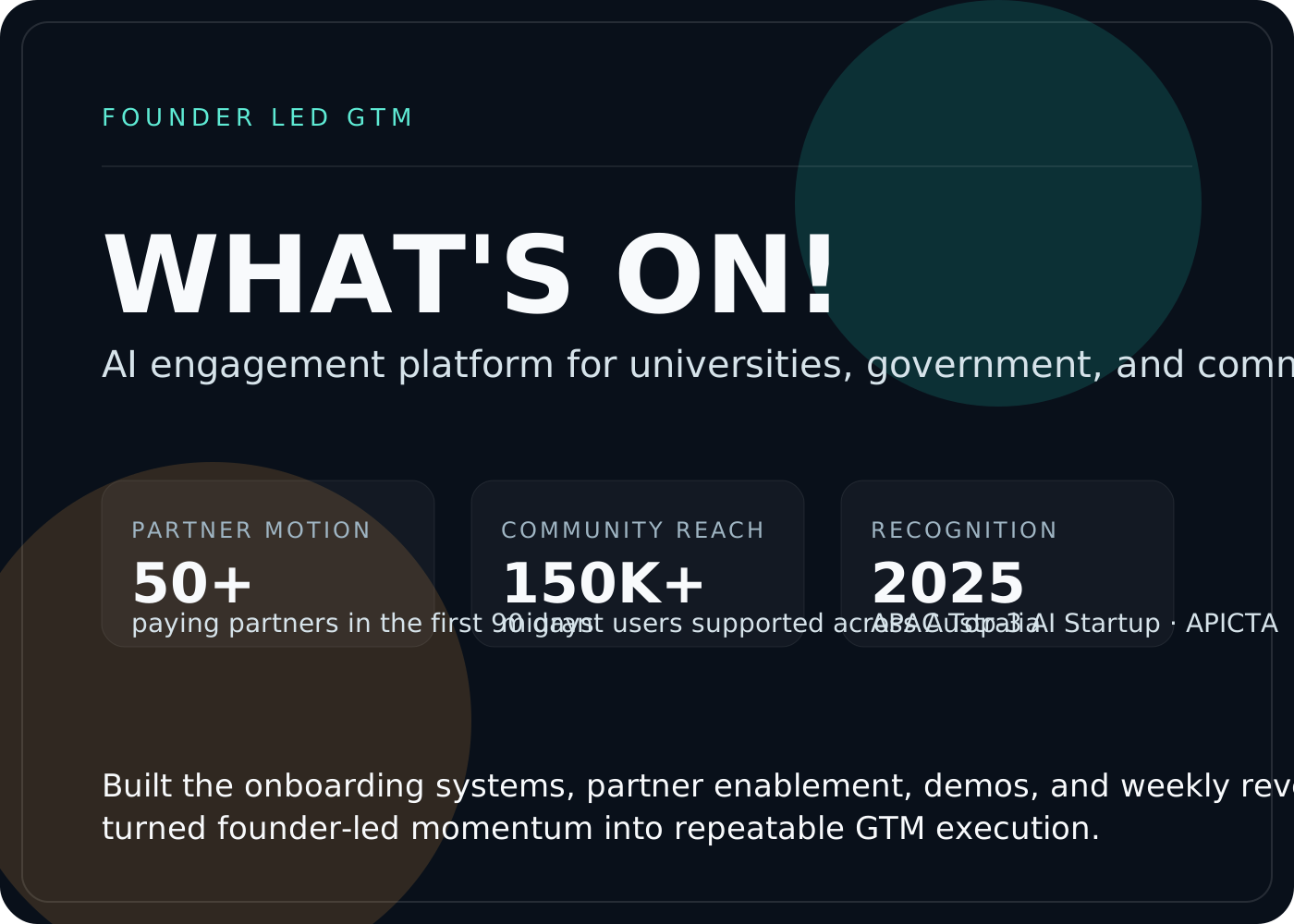
Relevant case studies and delivery examples.
The strongest pages show the work, not just the promise.
Frequently asked
Useful questions before someone reaches out.
What is AI literacy?
AI literacy is the baseline understanding of what AI is, how it works at a practical level, what it can and cannot do, and how to use it safely and responsibly. It is the foundation every organisation needs before deeper AI adoption.
What is the difference between AI literacy and AI fluency?
AI literacy is understanding — shared language, concepts, limits, and responsible use. AI fluency is applied skill — using AI tools well inside real workflows. Literacy comes first and applies to everyone; fluency follows for the teams whose work AI changes most.
What does an AI literacy program include?
A typical program covers core concepts in plain English, live demonstrations, capability and limitation literacy, responsible-use and privacy practice, output evaluation, and sector-specific scenarios — delivered as sessions sized to your organisation.
Who is AI literacy training for?
Everyone. Literacy programs are deliberately non-technical: boards, executives, managers, frontline staff, and support functions all need the same dependable baseline, tuned to their role and risk profile.
Explore next
Keep moving through the site
Related pages that help buyers move from first interest to a clear next step.
Next step
If the brief is still fuzzy, that is normal.
A good first conversation usually clarifies whether the next step should be training, a workshop, consulting, a keynote, or a discovery sprint.